
Initiative for Legal Aid (ILA)

Collaboration

Partnerships

ILA recognises that sustainable justice and development can only be achieved through effective collaboration.

Our partners

Who ILA works with

ILA builds and maintains strategic partnerships with national, regional and international stakeholders whose expertise and shared commitment strengthen South Sudan's justice and governance systems.

Initiative for Legal Aid (ILA) logo.UNFPA logo.
Coordination partner

UNFPA — GBV Workstream, South Sudan

ILA works with UNFPA through the Gender-Based Violence (GBV) Workstream in South Sudan, part of the humanitarian Protection Cluster coordination system.

Areas of engagement

  • Gender-based violence (GBV) partner coordination
  • Protection Cluster partner training
  • Humanitarian activity reporting (5W)
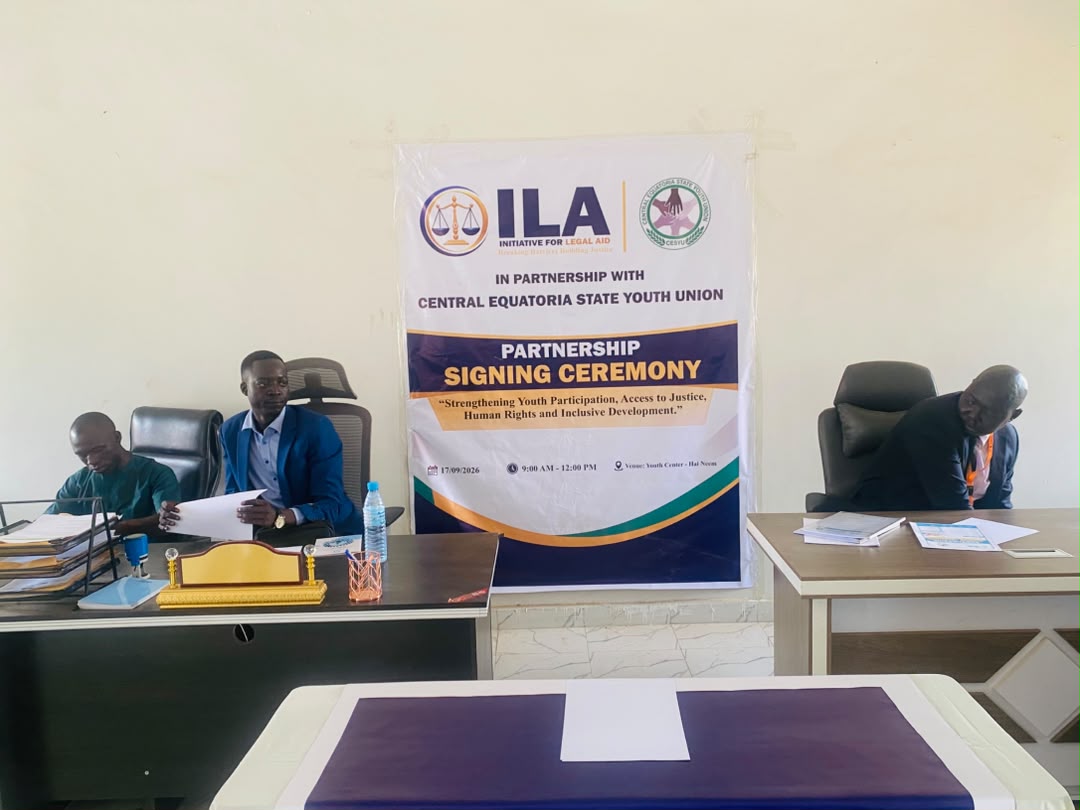
Initiative for Legal Aid (ILA) logo.Central Equatoria State Youth Union (CESYU) logo.
Partner since 17 September 2026

Central Equatoria State Youth Union (CESYU)

Strengthening Youth Participation, Access to Justice, Human Rights and Inclusive Development

Signed
Signed
Location
Youth Center – Hai Neem, Juba, South Sudan

Partnership focus areas

  • Legal awareness and access to justice
  • Human rights protection
  • Youth empowerment and participation
  • Community engagement and peacebuilding
  • Referral mechanisms and support services
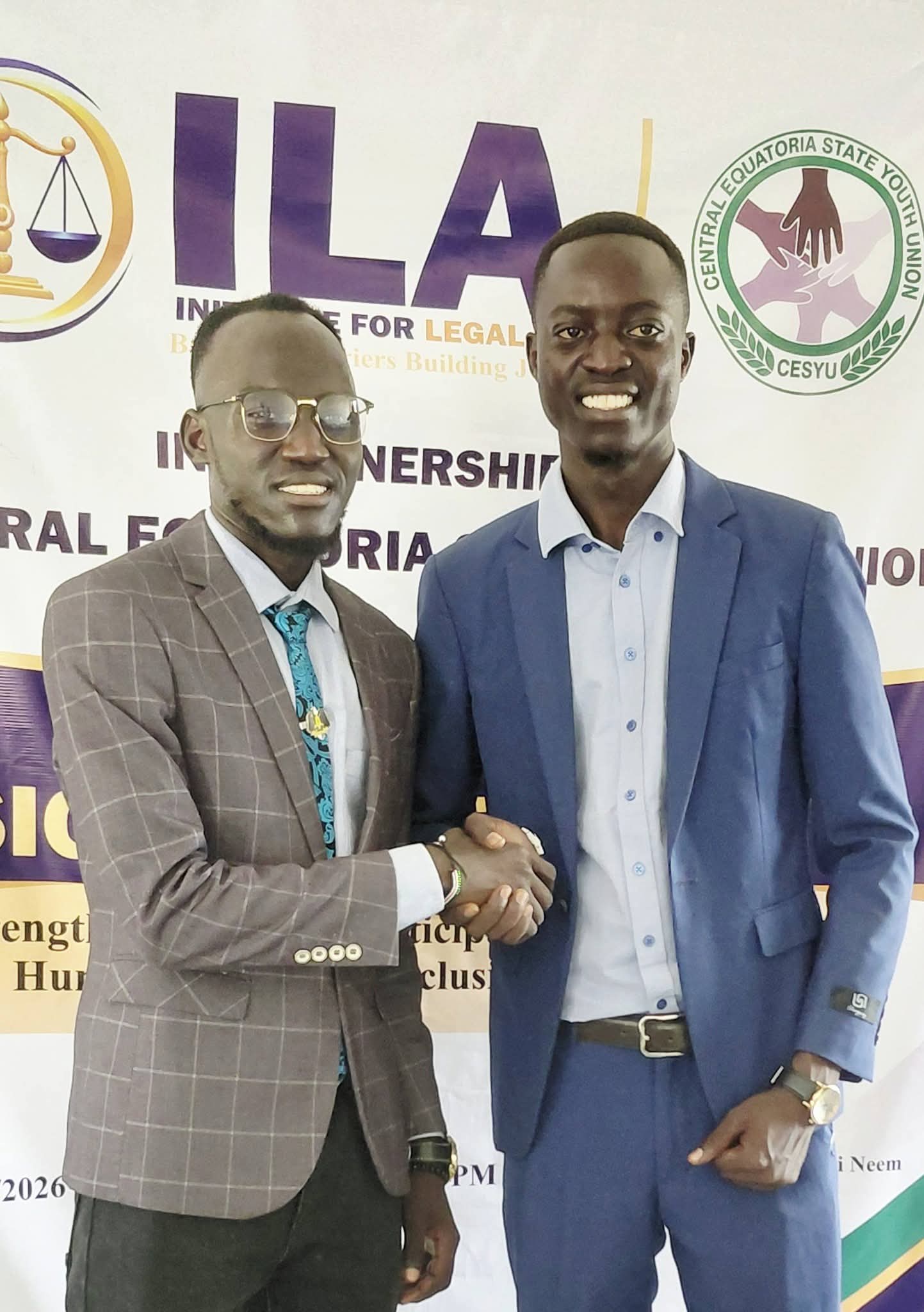
Representatives of ILA and CESYU shake hands at the partnership signing ceremony.
ILA and CESYU representatives at the signing ceremony. Photo: Initiative for Legal Aid (ILA)
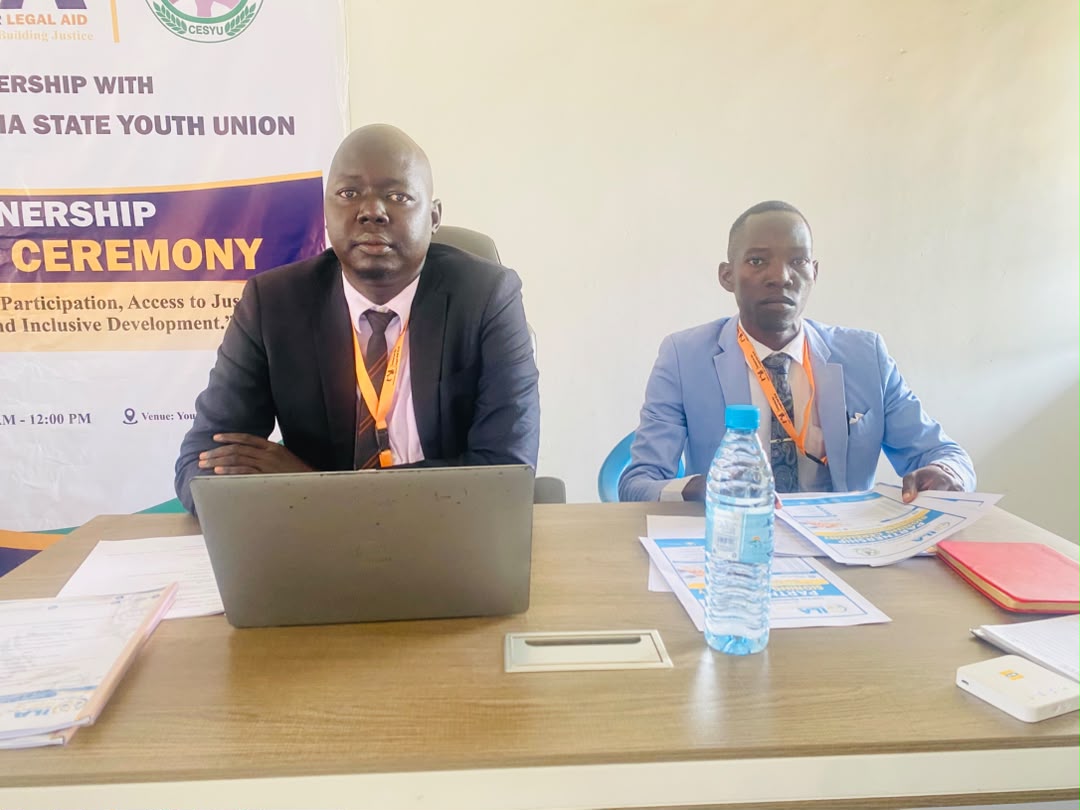
The signing table at the ILA and CESYU partnership signing ceremony.
The signing of the partnership agreement. Photo: Initiative for Legal Aid (ILA)
Signing of the partnership agreement between ILA and CESYU.
Signing the partnership documents. Photo: Initiative for Legal Aid (ILA)
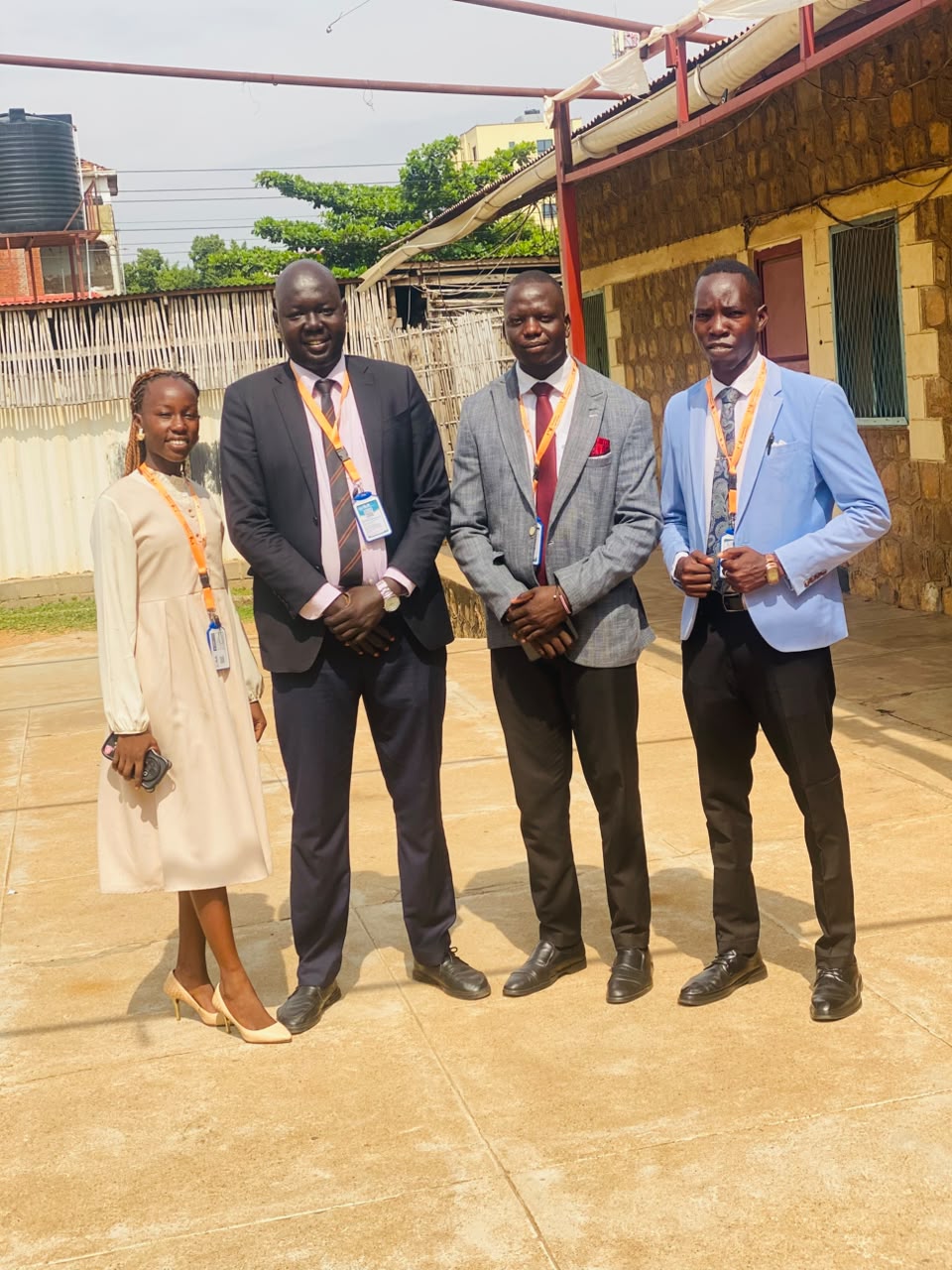
Participants at the ILA and CESYU partnership signing ceremony in Juba.
Participants at the ceremony, Youth Center – Hai Neem, Juba. Photo: Initiative for Legal Aid (ILA)

Institutions ILA works with

The list below sets out the categories of institution ILA works with. Named partners and donors are published only once a formal relationship has been confirmed by both organisations.

  • National Government Institutions
  • State and Local Government Authorities
  • The Judiciary
  • Prosecution Authorities
  • The South Sudan Bar Association
  • Law Enforcement Agencies
  • Correctional and Prison Services
  • Human Rights Institutions
  • Civil Society Organizations
  • Community-Based Organizations
  • Women's Organizations
  • Youth Organizations
  • Organizations of Persons with Disabilities
  • Faith-Based Organizations
  • Traditional and Customary Authorities
  • Academic and Higher Learning Institutions
  • Research and Policy Institutes
  • United Nations Agencies
  • International and National Non-Governmental Organizations
  • Bilateral and Multilateral Development Partners
  • Diplomatic Missions and Embassies
  • Professional Associations
  • Private Sector Institutions
  • Media Organizations
  • Philanthropic Foundations
  • Regional and International Human Rights Networks

Become a partner

What partners can expect from ILA

  • Strong Institutional Commitment

    A steadfast commitment to justice, human rights, the rule of law, democratic governance, and ethical service delivery.

  • Professional Legal Expertise

    A multidisciplinary team of qualified legal practitioners, human rights specialists, governance experts, researchers, programme managers, and development professionals.

  • Deep Contextual Understanding

    Comprehensive knowledge of South Sudan's legal framework, governance environment, cultural diversity, conflict dynamics, and community realities, enabling context-sensitive interventions.

  • Community-Centred Programming

    Strong relationships with local communities and stakeholders that ensure programmes are participatory, inclusive, responsive, and sustainable.

  • Transparency and Accountability

    Robust governance, financial management, procurement, safeguarding, and accountability systems that promote responsible stewardship of resources and compliance with donor requirements.

  • Strategic Partnerships

    Collaboration with government institutions, civil society organizations, community structures, and international partners that enhances programme effectiveness and collective impact.

  • Innovation and Continuous Learning

    Commitment to research, evidence generation, digital innovation, adaptive programming, and organizational learning that strengthens programme quality and long-term impact.

  • Effective Project Management

    Strong systems for project planning, implementation, monitoring, evaluation, financial reporting, risk management, and results-based management.

  • Operational Flexibility

    Ability to design and implement programmes across diverse geographic, political, and humanitarian contexts, including remote, conflict-affected, and hard-to-reach areas.

  • Focus on Sustainable Impact

    A long-term commitment to strengthening local institutions, building community resilience, promoting local ownership, and delivering measurable, lasting development outcomes.

Donor information

Due diligence and reporting

ILA maintains governance, financial management, procurement, safeguarding and accountability systems designed to meet donor compliance requirements and to support responsible stewardship of the resources entrusted to it.

The Board of Directors operates a Finance & Audit Committee and a Risk & Compliance Committee, and an Internal Audit Officer reports independently of programme management.

Institutional documentation — governance, financial, safeguarding and MEAL — is available to prospective donors on request from the head office in Juba.

Areas of collaboration

  • Joint programming and co-implementation
  • Research and evidence generation
  • Policy dialogue and legal reform
  • Institutional capacity development
  • Knowledge sharing and learning
  • Resource mobilisation

Work with ILA

Start a partnership conversation

ILA welcomes enquiries from government institutions, UN agencies, development partners, foundations, NGOs, academic institutions and civil society.